Mantras help your soul get connected with the supreme power or the creator of beings and to seek HIS blessings. Mantras act as a divine prayer to heal, to forgive, to love, to nourish and to attain salvation after death.
Also be it small yoga business owners or large ones you are concerned about covering yourself and your business from errors, egregious posts, and unsuitable hashtag appropriation. Choosing suitable professional indemnity insurance or public liability insurance does help but you need to find the right online policy or online insurance that covers the risk of offering yoga classes through social media channels.
Running a yoga studio is a deeply rewarding journey, but it’s also a challenging business in a competitive and fast-evolving wellness industry. While your teaching skills and passion form the foundation of your studio, sustained growth requires more: smart systems, efficient booking management, strong community engagement, and a clear marketing strategy.
Whether you’re a new yoga studio owner or an established teacher wanting to expand, this guide covers proven strategies to boost your yoga studio growth, attract more students, increase your revenue, and create a thriving yoga community.
Why Most Yoga Studios Struggle with Growth
Before diving into strategies, it’s important to understand why many yoga studios reach a plateau:
They rely on manual bookings and WhatsApp messages.
They have inconsistent marketing or rely solely on Instagram.
Growth happens when your studio becomes easy to find, easy to book, and easy to return to.
Boost Your Yoga Studio Growth
Let’s look at the most effective ways to grow a yoga studio sustainably and profitably.
1. Optimise Your Online Booking System
f students struggle to book your classes, they won’t return. A smooth online booking process is essential for growth—especially when 80% of people now prefer booking classes online.
1 A: Use a Dedicated Yoga Booking Software
Instead of managing bookings manually, use an all-in-one system like KRIYA, or others, which help yoga studio owners:
Manage class schedules
Take online payments
Sell passes, memberships & packages
Track attendance
Automate confirmations & reminders
Reduce no-shows
Improve customer experience
Automation not only saves time, but it also directly increases your revenue by reducing cancellations and friction.
1 B: Make Booking Available 24/7
Your booking link should be:
On your homepage
On your navigation menu
On your Instagram bio
In every email
On Google Business Profile
The easier it is to book, the faster you grow.
Strengthen your online presence
2. Build a Strong and Balanced Class Schedule
Your class schedule determines how many students you can serve and how profitable each week is. Many studios struggle simply because their schedule does not match student demand.
2 A: Analyse When Students Prefer Classes
Most studios see the highest attendance during:
6 am – 8 am (workers & fitness clients)
6 pm – 8 pm (after work)
Saturday & Sunday mornings
If your peak-demand slots are empty or poorly optimised, you lose growth opportunities.
2 B: Offer a Good Mix of Yoga Styles
A diverse schedule helps attract a broader audience. Consider offering:
Vinyasa Flow
Hatha Yoga
Yin Yoga
Restorative Yoga
Power Yoga
Sound Healing or Meditation
Beginners courses
Yoga for Seniors or Prenatal Yoga
Specialised classes bring new audiences and allow you to charge premium pricing.
2 C: Use a Waiting List System
If your booking software supports waiting lists, your studio can:
Fill cancelled spots instantly
Keep classes full
Avoid losing revenue
Waiting lists are one of the easiest ways to grow attendance without extra marketing.
3. Improve Your Student Retention Strategy
Getting new students is expensive. Retaining them is where your real growth happens.
3 A: Create a Smooth First-Class Experience
First impressions matter. Ensure:
Your teachers welcome every student
The sign-in process is easy
The studio is clean and organised
There is clear guidance for beginners
A positive first class increases the chance of a return visit by 70%.
3 B: Introduce Starter Offers
New students are more likely to return when offered:
Intro Pass (7 days / 14 days / 30 days)
Discounted first class
New student membership
Intro passes convert occasional students into regulars.
3 C: Send Follow-up Emails Automatically
Use your booking software to send:
A thank-you email after their first class
Tips for beginners
A special offer to join a membership
Reminders when their pass is expiring
A simple automated email campaign can double your retention rate.
4. Strengthen Your Online Presence
Students choose yoga studios online first. Your digital presence is your silent salesperson.
4 A: Build a High-Converting Yoga Studio Website
Your website should include:
Class schedule
Pricing & passes
A “Book Now” button
Teacher bios
Photos of the studio
Testimonials
FAQs
Contact information
Your website does not need to be complicated—it just needs to help users book quickly.
4 B: Optimise for Local SEO (Search Engine Optimisation)
SEO helps your yoga studio appear on Google when people search:
“Yoga studio near me”
“Best yoga classes in Sydney”
“Beginner yoga Melbourne”
“Yin Yoga near me”
To improve SEO:
Add location-specific keywords
Create blog posts about yoga & wellness
Add your studio to Google Business Profile
Encourage reviews
Add local landmarks and suburbs to your pages
Local SEO brings you consistent new students without paid ads.
4 C: Increase Your Google Reviews
Reviews boost trust and improve your ranking.
Ask your students:
After class
Through email
Via WhatsApp
Through a QR code in the studio
Aim for at least 50 reviews to significantly improve your online visibility.
5. Use Social Media Strategically
Posting yoga photos alone is not enough. Use social media with intention:
Educate: Post about alignment, breathing, flexibility, meditation, and yoga philosophy.
Show Behind the Scenes: People connect with real stories, real teachers, real studio life.
Promote Events and Workshops: Workshops attract new students and encourage existing students to deepen their practice.
Use Reels and Short Videos: Short videos get more reach and engagement than static images.
Post Your Class Schedule Weekly: People need consistent reminders, and increasing visibility directly drives bookings.
6. Host Events, Workshops & Special Programs
Workshops, events, and challenges create excitement and bring in additional revenue.
Interested in getting trained in India then you will be surprised to find that each year there are thousands of people coming from the West and around the globe to learn Yoga. You will get to know about Indian culture as well as integrate the teachings, connect with the divine within and seek clarity to any questions you may have to discover the truth within.
There are various types of Martial Arts that you can join. It takes time to learn this art form and more you practice more you are perfect in it. Also, the speed of hand is critical in Martial Arts. To master the skill of martial arts you must be able to launch numerous attacks in a short period of time so that your opponent does not get a chance to react or respond.
The western name for yoga Nidra is iRest adapted to suit the conditions of modern life. When practiced regularly iRest enables you to meet each moment of your life with unshakable peace and wellbeing, no matter how challenging or difficult your situation is.
Though you can minimize your exposure to these germs and keep your practice clean and hygienic on yoga mats, you need to think which yoga mat is best for you at the time of COVID19.
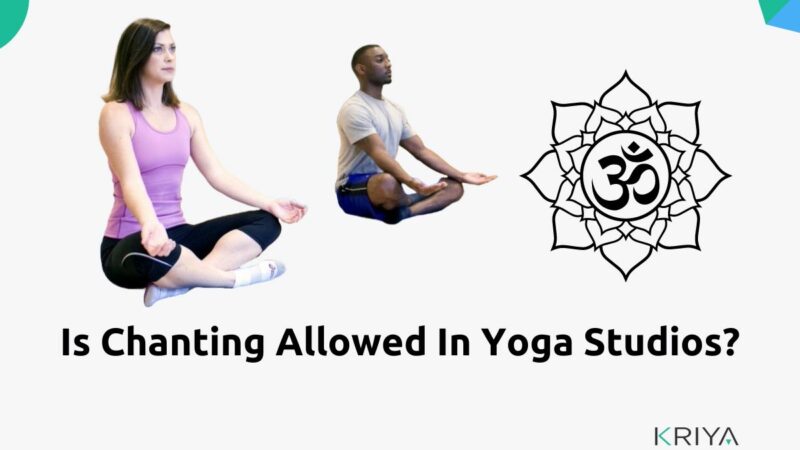
If you are taking a meditation class where chanting is necessary, then the best alternative is to hear chants rather than speaking it out. Because sound heals the body and relaxes the nervous system.
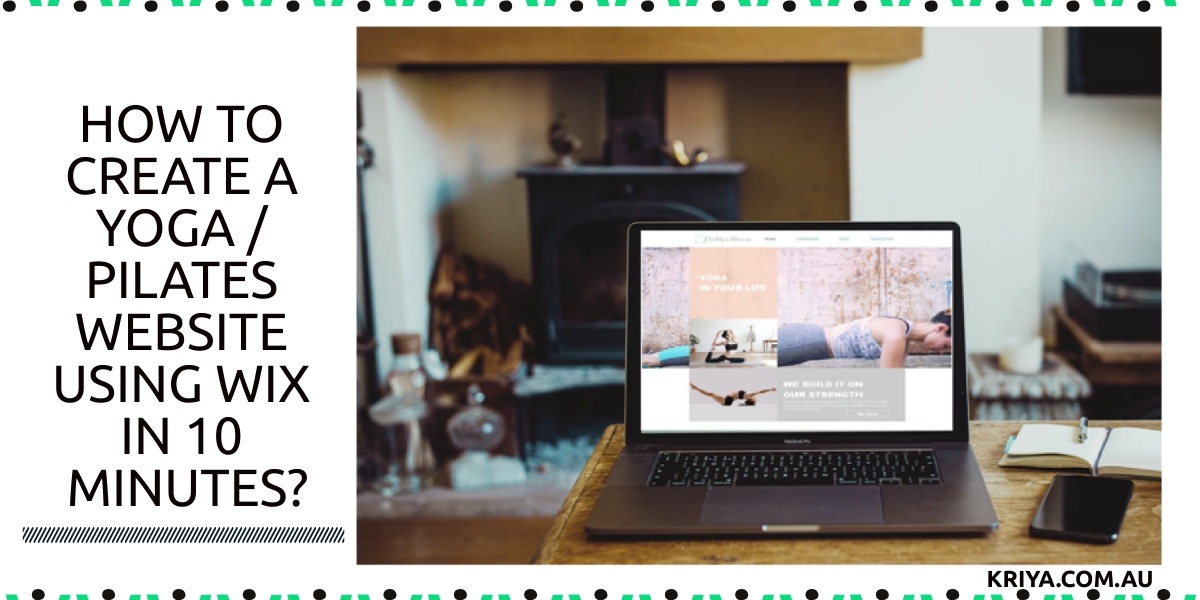
You can choose to opt for custom text and images for your Yoga studio site by letting Wix ADI center to create a website for you or choose one from the template and fill in your text and images thereby creating your own stunning website in the Editor.
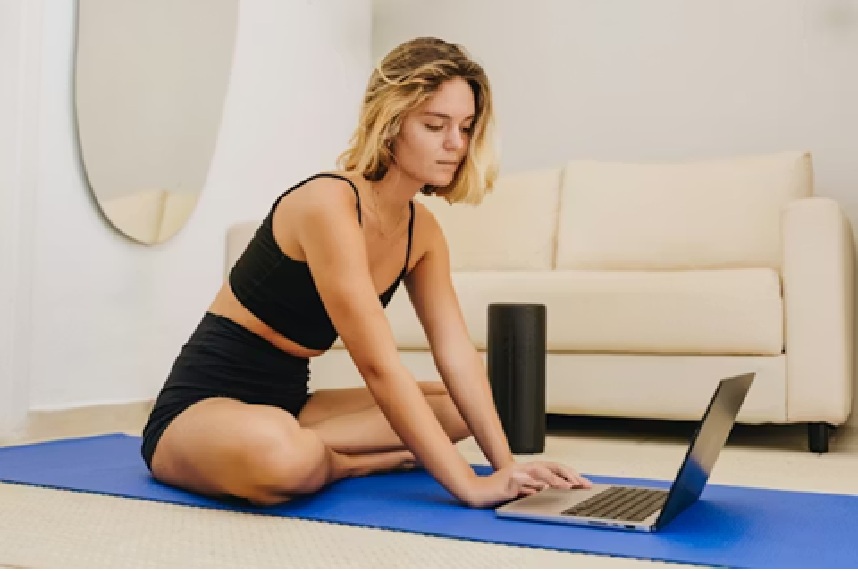
As your mobile device or smartphone is too small to live stream the class, many yoga studio instructors use their laptop or prefer smart TV to stream their training sessions. In fact, smart TV is the ideal device to live stream your classes.
The most effective and popular these days is using online scheduling and management software to make your yoga studio schedule. This can be done with your mobile or PC or tablet and hardly takes minutes of time if you have planned ahead everything and are just ready to customize your schedule the way you want.
To generate money-making ideas you have to think beyond your daily routine to maintain your yoga studio. You need to build a strategy where you have to take time out of your daily routine at the studio and work for this extra money making ideas.
If you’ve completed your 200-hour yoga teacher training but haven’t yet taken the leap into teaching, you’re not alone.
Many new teachers face the same uncertainty. To help you build confidence and knowledge, here are some strategies, programs, and resources available in Australia that can support your journey to becoming a confident yoga teacher.
1. Start Small and Build Regularity
A great way to begin teaching is to start small. Choose a local park, pick a regular day, and invite a friend or two to join you for practice sessions. This relaxed environment allows you to develop your teaching dialogue and enjoy the process without pressure.
Practising regularly in this way will naturally boost your confidence and smooth the transition to teaching more formal classes.
Host “Practice & Play” sessions in local parks (check council permits)
Organize small group classes in community spaces
Offer lunch-break sessions at your workplace
Lead online classes for friends and family
2. Consider Advanced Training
As your confidence grows, it might be time to consider advanced training. Continuing your education is key to deepening your practice and refining your teaching skills. Take your time to research and find a trainer that resonates with you. For example:
Sukha Mukha Community in Sydney offers advanced teacher training, which can be completed as a full program or in separate modules. Their supportive and knowledgeable trainers are known for helping new teachers build confidence.
BodyMindLife has been a leader in the yoga community, offering excellent support for new teachers. It’s worth contacting them to see what advanced training opportunities they currently offer.
3. Utilize Online Resources
Online resources can also be incredibly helpful, especially if you find a program that aligns with your style. Websites like Yoga Australia, Yoga International and even Gaia provide many resources for teachers at all levels.
I personally enjoyed At Home With Tanya, which offers online classes and mini-courses. I believe she is based in Bali.
4. Plan, Practice, and Speak
Begin planning your classes, even if you’re not yet teaching. Prepare a class and practice teaching it aloud as if you were instructing a real group. This exercise will help you find your teaching voice and prepare you to teach actual students.
Pro Tip: Record yourself teaching. Analyze your language, pacing, and instructions. Practice with your recording.
5. Explore Mentorship Opportunities
If you’re seeking more personalized guidance, consider finding a mentor. For example:
Yoga Australia provides a comprehensive list of registered Level 3 mentors, many of whom offer their services for free. Finding a mentor who aligns with your goals can be a game-changer in your teaching journey.
6. Just Start Teaching
Ultimately, the best way to build confidence is to start teaching, even if it’s just for friends, family, or at a smaller studio that supports new teachers.
Experience is the greatest teacher—don’t worry about making mistakes, as they are an essential part of the learning process. As you teach more, you’ll develop your unique style and gain clarity on what additional training (if any) you might want to pursue in the future.
Remember, there’s no fixed path to becoming a confident yoga teacher. It’s all about finding what works for you, continuing your practice, and embracing the journey. Every class you teach, no matter how small, brings you one step closer to becoming the teacher you aspire to be.
Stay connected with the broader yoga community through events, workshops, and Facebook groups. Your teaching journey is unique – embrace the learning process and trust in your ability to share yoga’s transformative power.
Planning an intimate yoga retreat involves juggling many factors to create a memorable experience. The right environment, comfortable accommodation, a skilled teacher or host, the dynamics of the group, and the balance of yoga practice with other activities all play crucial roles in making a retreat successful.
To help you navigate this process, I’ve curated a list of the top 10 retreat venues near Sydney, each offering a unique blend of luxury, tranquillity, and convenience. These venues provide the ideal setting for a memorable and rejuvenating retreat experience.
Why Choosing the Right Venue Matters
The environment in which your yoga retreat takes place can significantly impact the overall experience. A thoughtfully chosen venue sets the tone and provides the space and atmosphere necessary for participants to relax, rejuvenate, and deepen their practice.
When selecting a retreat venue, several key factors should be considered to ensure a seamless and enriching experience:
Distance from Sydney: How far is the venue, and is it easily accessible for participants travelling from the city?
Accommodation Details: Are the rooms comfortable? Consider the number of beds, whether they are single or queen-sized, and if the venue can accommodate couples.
Yoga Space: Is there ample room for all participants to practice, even if it rains? The yoga space should be spacious, well-ventilated, with natural light and ideally indoors or under cover.
Dining Facilities: A communal dining table where everyone can sit and share meals together can make dinners memorable.
Outdoor Amenities: Can you make a fire? Are there outdoor spaces like walks or tracks for short hikes?
Swimming Opportunities: Is there access to a pool, beach, lake, or billabong where participants can swim or relax by the water?
Each location on this list has been carefully selected to offer a luxurious yet peaceful setting, with these considerations in mind, ensuring your retreat is memorable for all the right reasons.
1. Sage Manor Bowral
Sage Manor Bowral
Location: Bowral, NSW
Distance from Sydney: 90 minutes
Capacity: Suitable for small groups
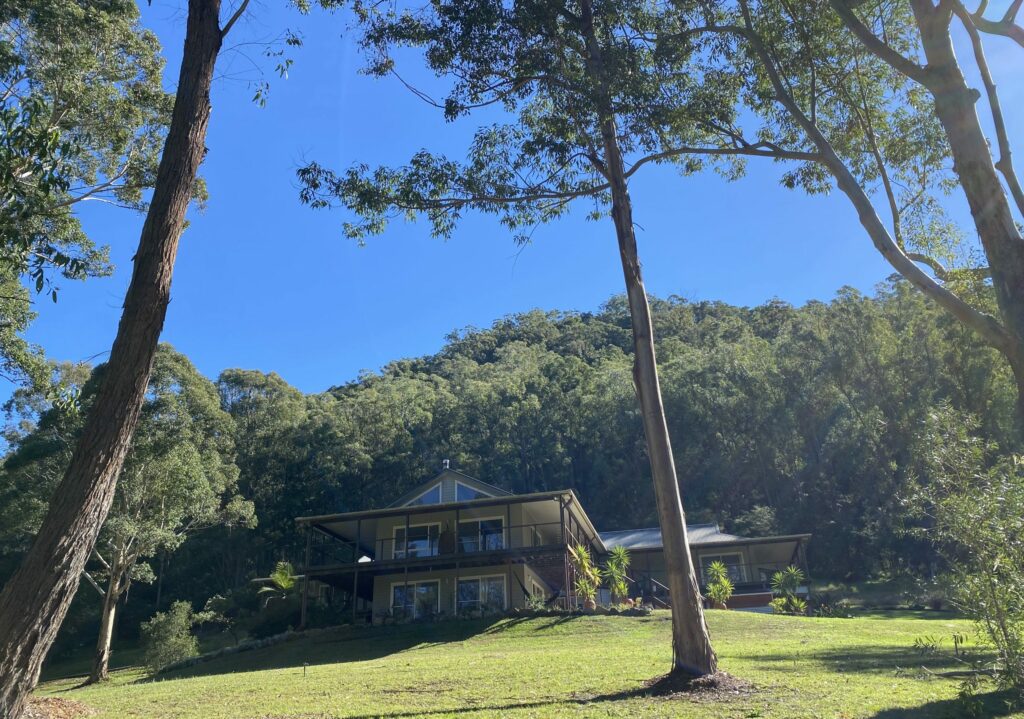
Highlights: The luxurious feel, beautiful surroundings, comfortable accommodation, and luminous yoga space make it highly recommended by previous retreat hosts.
These venues offer a range of settings, from luxurious estates to rustic, nature-immersed spaces, all within 2-3 hours of Sydney. Whether you’re looking for a fully catered experience or a self-catering option, these venues cater to various needs and preferences.
Tips for Planning a Successful Yoga Retreat
Consider Your Group Size: When selecting a venue, ensure it comfortably accommodates your group. Smaller groups might appreciate a more intimate setting, while larger groups may require more space.
Catering Options: Decide whether you want a venue that offers catering or if you prefer to bring in your chef. Some venues have fully equipped kitchens, which can be a great option if you want to customize your meal plan.
Scheduling and Flow: Create a schedule that allows for plenty of relaxation time and ensures the venue’s facilities can support your planned activities. Consider morning meditations outdoors or evening yoga sessions in a dedicated studio space.
Packing Essentials: Advise participants to bring yoga mats, props, and comfortable clothing. Some venues provide yoga equipment, but it’s always good to double-check.
How to Choose the Right Venue for Your Group
When choosing the right venue, consider your group’s specific needs and desires. Here are some key questions to guide your decision:
Communal Spaces: Check if the venue has communal spaces like a dining area where everyone can gather and connect during meals.
Seclusion vs. Accessibility: Are you looking for a location that offers complete seclusion, or do you prefer something closer to shops? Some venues offer the perfect balance, providing a serene environment while being accessible.
Accommodation Requirements: Evaluate the accommodation options, including the number of rooms and bed sizes. Consider whether the venue can accommodate couples or if single beds are more appropriate for your group.
Budget Considerations: While luxury is appealing, balancing your budget is essential. More affordable yet equally beautiful options are available that don’t compromise on quality.
Outdoor and Recreational Facilities: Determine if the venue offers outdoor spaces for activities like hiking, swimming, or even a volleyball net, which can add variety to your retreat schedule.
In Conclusion
Finding the perfect retreat venue near Sydney doesn’t have to be overwhelming. With so many beautiful options within a few hours of the city, you’re sure to find a location that meets your needs and exceeds your expectations.
Whether you’re seeking luxury, seclusion, or a connection to nature, these venues provide the perfect backdrop for an intimate yoga retreat that your participants will remember for years.
When I first started exploring Iyengar yoga in Sydney, I knew finding the right teacher and studio would be key to deepening my practice. Over time, I visited several studios, each offering something unique.
Here’s a guide based on my personal experiences to help you find a teacher who resonates with you and a studio within reasonably easy access.
1. Iyengar Yoga Institute of Bondi Junction
My first stop was the Iyengar Yoga Institute of Bondi Junction. This studio quickly became one of my favourites. The atmosphere is welcoming, and the instructors are deeply committed to the Iyengar tradition.
I’ve attended classes with different teachers, each bringing their depth of knowledge and unique teaching style. My favourite teachers are Carole, Lisa, and Kirsten.
Classes are meticulously structured, ensuring every beginner or advanced student gets the most out of the session. Prices are reasonable, with drop-in classes around $25 and various class packs available for regular practitioners.
2. Elixr Health Clubs
I discovered Elixr Health Clubs while looking for a studio that offered a variety of fitness options alongside yoga. While not exclusively an Iyengar studio, Elixr offers Iyengar classes that are well worth attending. The instructors are knowledgeable, and the facilities are top-notch.
The membership model means you can take advantage of other wellness services as well, but for those focused solely on yoga, they offer drop-in options.
A casual class costs around $30, and memberships start at $38 per week and give you access to all their classes and amenities.
3. Pixie Lillas’ Studio on Darling Street, Balmain
One of the most profound experiences I’ve had in my yoga journey was at Pixie Lillas’classes on Darling Street in Balmain. Pixie is one of Australia’s most senior Iyengar practitioners, and practising under her guidance is an experience every Iyengar enthusiast should seek out. Her classes are intense and deeply informative, offering insights that can only come from years of dedicated practice.
The studio maintains a traditional approach, with a strong focus on the foundational principles of Iyengar yoga. Class prices are around $25, with packages available for regular attendees.
4. Marrickville Yoga Centre
The Marrickville Yoga Centre quickly became one of my go-to spots. This studio has a warm and inclusive vibe in the eclectic suburb of Marrickville. I’ve taken classes with several teachers, each bringing a deep understanding of Iyengar yoga. Whether you’re new to Iyengar or a seasoned practitioner, you’ll find a class that suits your level.
The pricing is accessible, with a drop-in class costing $24 and discounts for multiple class passes. Their head teachers, Peter Thomson and Erika Cranson, are well-respected figures in the Iyengar community.
5. Neutral Bay Yoga Centre
The Neutral Bay Yoga Centre is a dedicated Iyengar school, and it’s clear from the moment you walk in. The teachers here are committed to upholding the high standards of Iyengar yoga, and the classes are thorough, challenging, and deeply rewarding. I particularly appreciate the smaller class sizes, which allow for more individual attention.
The centre’s head teacher, Simon Marrocco, is one of Australia’s most experienced Iyengar instructors. Classes are priced around $22, with various options available depending on your commitment level.
6. Black Lotus Studio
When I need a more intimate and serene environment, I head to Black Lotus Studio. This hidden gem in the inner city offers a variety of yoga styles, but their Iyengar classes stand out. The studio’s tranquil atmosphere and skilled teachers make it a perfect place for deepening your practice.
Classes are priced at $25 each, and they offer a first-timer deal, which is a great way to try out their offerings without committing to a full course.
7. The Yoga Nook
If you’re looking for a retreat experience, The Yoga Nook offers an Iyengar yoga retreat suitable for teachers of any style. I attended one of these retreats and found it to be an invaluable experience. The retreat allows you to immerse yourself fully in the practice, surrounded by like-minded individuals in a peaceful setting.
It’s a great way to deepen your understanding of Iyengar yoga while also taking a break from the hustle and bustle of city life. The pricing varies depending on the length of the retreat, but it’s worth every penny for the experience.
8. Australian Iyengar Yoga Association
Finally, the Australian Iyengar Yoga Association website is an excellent resource if you’re looking for more options or specific guidance. It offers a comprehensive list of certified Iyengar studios and practitioners across Sydney and Australia.
This site can help you find a new class, a workshop, or even teacher training.
Yoga has come a long way from the traditional Kriya Yoga I’ve been a student of for years. While the ancient practice of yoga has stood the test of time for thousands of years, evolving subtly with the depth of the Sanskrit language, the idea of something as modern as “Rocket Yoga” might seem at odds with these age-old traditions. But should it be?
The beauty of yoga lies in its ability to evolve while staying rooted in tradition. The Ashtanga and Iyengar styles, developed over a century ago, have their foundations firmly planted in ancient practices, but that doesn’t mean yoga shouldn’t evolve with modern science and the needs of today’s practitioners—though, of course, not in a way that diminishes its essence.
Rocket Yoga, a modern and dynamic style, is one such evolution. It’s fun, fast-paced, and reminiscent of Vinyasa or Power Yoga. Although it’s not as popular yet in Australia as in other parts of the world, it has its niche following, especially among more advanced practitioners.
What is Rocket Yoga?
Rocket Yoga was created by Larry Schultz, a pioneering American yoga teacher who studied under Ashtanga Yoga founder K. Pattabhi Jois. Schultz developed Rocket Yoga to make the Ashtanga practice more accessible while still retaining its challenging and dynamic nature.
The name “Rocket” comes from Bob Weir, a founding member of the band Grateful Dead, who once commented that Schultz’s sequences “get you there faster,” much like a rocket.
Rocket Yoga consists of three main sequences: Rocket I, Rocket II, and Rocket III. These sequences modify the traditional Ashtanga series, making them more adaptable to a wider range of practitioners while still maintaining the intensity that appeals to more advanced students.
The practice is characterized by its emphasis on arm balances, inversions, and a fluid, fast-paced flow.
Rocket Yoga in Sydney
Although Rocket Yoga hasn’t gained widespread popularity in Australia, there are a few studios where you can experience this dynamic practice. One standout location is BodyMindLife, a well-known studio in Sydney that offers a variety of yoga styles, including Rocket Yoga.
Norma Nelson, one of Sydney’s premier Rocket Yoga instructors, teaches at BodyMindLife. Her classes are known for their energy, precision, and the way she guides students through the challenging sequences with encouragement and expertise. Norma’s approach makes Rocket Yoga accessible even for those who are new to the style but are looking for a challenge.
Georgia Sinclair is a notable Rocket Yoga teacher with a strong reputation for her dynamic and engaging classes.
Rocket Yoga Beyond Australia
Rocket Yoga has a much larger following in the UK and the US, where the yoga community has embraced it. In the UK, David Kyle is one of the leading figures in Rocket Yoga. A direct student of Larry Schultz, the creator of Rocket Yoga, David has been instrumental in spreading Rocket Yoga across Europe and beyond. His workshops and teacher training are highly sought after for their depth and intensity. You can learn more about David Kyle and his work on his official website.
Another notable teacher in the UK is Marcus Veda. Known for his vibrant energy and strong Ashtanga background, Marcus has made a name for himself with his dynamic Rocket Yoga classes that attract students nationwide. You can follow Marcus Veda on Instagram to keep up with his latest classes and workshops.
In the US, Steve Pyka is a key figure in the Rocket Yoga community. Alongside his partner, Dana Flynn, Steve co-founded Love Yoga in Los Angeles, where Rocket Yoga is a core part of the studio’s offerings. His teaching is known for blending the traditional elements of Ashtanga with the modern, playful approach of Rocket Yoga, making it accessible yet challenging for a wide range of students.
Another prominent name in the US is Amber Jean, who teaches Rocket Yoga in San Francisco. Amber has a strong background in both Rocket and Ashtanga Yoga, and her classes are known for their intensity and focus on alignment, making her a favourite among serious practitioners. You can find more about Amber Jean and her classes on her official website.
Is Rocket Yoga Right for You?
While Rocket Yoga is a modern twist on traditional practices, it’s not for everyone—especially beginners. The sequences are challenging and focus on strength, flexibility, and balance, making them more suitable for those with a solid foundation in yoga who want to take their practice to the next level.
However, if you enjoy the physicality of yoga and thrive on a fast-paced, energetic practice, Rocket Yoga might be just what you’re looking for. The blend of tradition and modernity offers a unique experience that pushes the boundaries of yoga while still honouring its roots.
Final Thoughts
Does Rocket Yoga represent the evolving nature of yoga—a practice that can grow and change while respecting its ancient origins? Whether in Sydney, the UK, or the US, there are opportunities to explore this dynamic style and see if it resonates with your practice.
FAQs
Is rocket yoga for beginners?
Rocket Yoga is generally not recommended for complete beginners. The practice is a modification of the traditional Ashtanga series, known for its intensity and focus on strength, flexibility, and endurance.
Rocket Yoga incorporates challenging poses, including arm balances, inversions, and fast-paced sequences, which can be difficult for those new to yoga.
Though Hourly Rates of Yoga teachers depend on their teaching experience; class rates can vary from $35 per class for a new teacher at a small studio up to $75 per class for experienced teachers at an established and well-known studio.
It was a fresh winter morning in Sydney East this morning. The waves were roaring; the sun was still trying to crack the clouds open when I was doing my own practice, facing due East in Bronte.
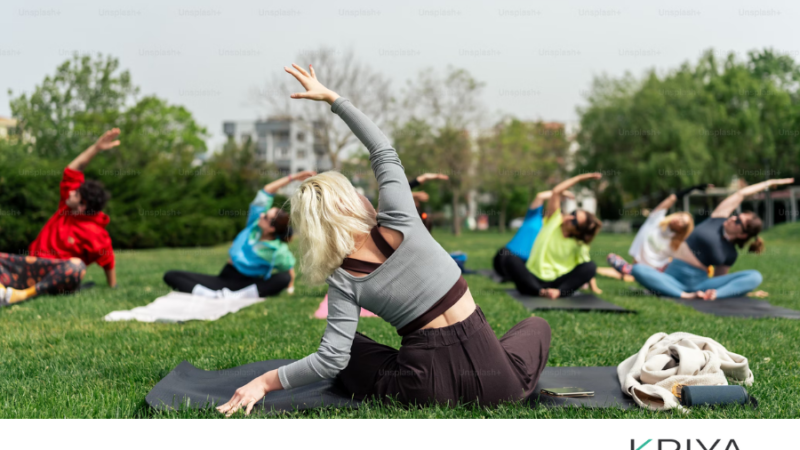
Although I was trying to stay focused and with my attention on my breath and body, I couldn’t help noticing a group of about nine mats near me—a slim and tall leader with a beanie leading the sequence.
Then, I noticed some disruption to their practice. Two rangers came politely to ask for her permit.
She claimed they were friends, but I couldn’t help sensing frustration in her tone. The exchange lasted just over seven minutes, disturbing theirs and my practice.
Later that day, I decided to look into this in detail.
What are the terms and conditions of teaching yoga or pilates in an outdoor public space in Sydney? Do you need insurance?
All local, state, and federal-managed green spaces require an application or licence to conduct yoga in the park. You could be fined for non-compliance if you don’t follow their approval processes.
Most councils need insurance, a first aid certificate, and council authorisation.
Some areas are restricted, and there is usually a code of conduct we must review and agree to.
Every council is different, so it is best to double-check with your local council. Just search for ‘council name outdoor fitness training’.
You need to get park permits from your local council. They may require you to submit PL insurance and a mini-risk plan. All details should be on the council’s website.
You should always have insurance and get clients to sign waivers.
Some councils may require you to be registered with a body such as AusActive. They should be able to document all of their requirements for you.
Some are free to a certain number, but you must register, and some are paid.
In Sutherland Shire, you pay an annual fee to legally use a public space. Randwick Council operates a permit system. North Sydney Council doesn’t charge, but you need to get a license to teach, and there are restrictions on where you can teach. In the Gold Coast, you don’t need a permit from us if you are providing health and fitness activities on a not-for-profit basis.
Frequent Questions
For those who teach in a park, what’s the going rate/per person?
It can be a donation or anything between $10 to $25 per class.
Do I need to notify the council every time I conduct a class?
It depends on the council. Some may require advance notice for each session, while others only need a one-time permit.
Are there specific times when I can hold classes?
Most councils will have designated times when fitness classes can be conducted.
Can I use amplified sound during my classes?
Many councils have restrictions on the use of amplified sound in public spaces.
Are there limits on the number of participants?
Yes, there may be limits. These can vary by council.
A type of contract, client agreement can be documented through a lawyer or you yourself can write it and get it legalized through a lawyer or at your local court. Do you need a client agreement for your yoga studio business? The answer is Yes, you need a client agreement for your yoga studio business as it is an important document for you as well as for your customer’s protection.